NeighbourhoodAmstel / City Centre
Engineering Heritage
Amstelsluizen
A 17th-century masterpiece of water management, these historic locks stand as a testament to Amsterdam's enduring battle with the sea.
Best forPhotography and History
Plan for15-30 minutes
Worth knowingBest viewed from the Magere Brug or a boat.
Water Management
The Gateway of the Amstel
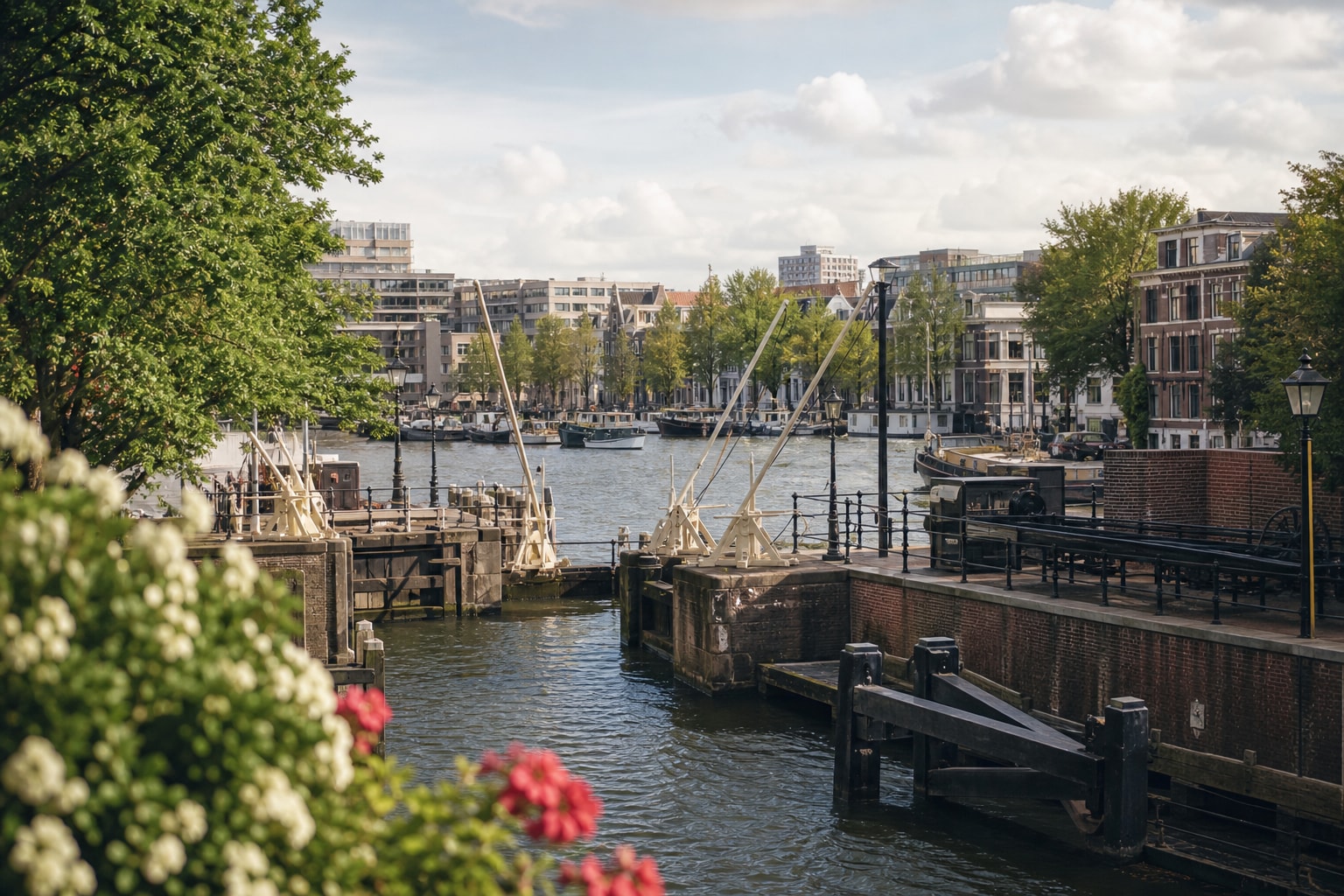
The Amstelsluizen, or Amstel Locks, represent one of the most significant engineering feats of the Dutch Golden Age. Located in the heart of the Amstel river between the Prinsengracht and Singelgracht, this complex of locks was designed to regulate the city's water levels and protect its residents from the encroaching salt water of the IJ.
Today, the locks are a protected Rijksmonument (national monument). While their primary function remains water management, they have become a beloved landmark for visitors and locals alike, offering a wide, scenic vista of the river that contrasts with the narrow, intimate feel of the inner city canals.
Golden Age Innovation
The Vision of Johannes Hudde
Constructed in 1673, the Amstelsluizen were the brainchild of Johannes Hudde, a multi-talented mathematician and the Mayor of Amsterdam. Hudde’s design was revolutionary for its time, providing a sophisticated solution to the city's constant struggle with fluctuating tides and water purity. By controlling the flow of the Amstel, the locks prevented the city's canals from becoming stagnant or overly salty.
The locks have been immortalized in numerous artworks throughout the centuries, including notable sketches and paintings held in the Rijksmuseum collection. These historical records highlight how little the structural essence of the locks has changed, maintaining their 17th-century character amidst a modernizing city.
What to See
Landmarks and Vistas
Architecture
Royal Theater Carré
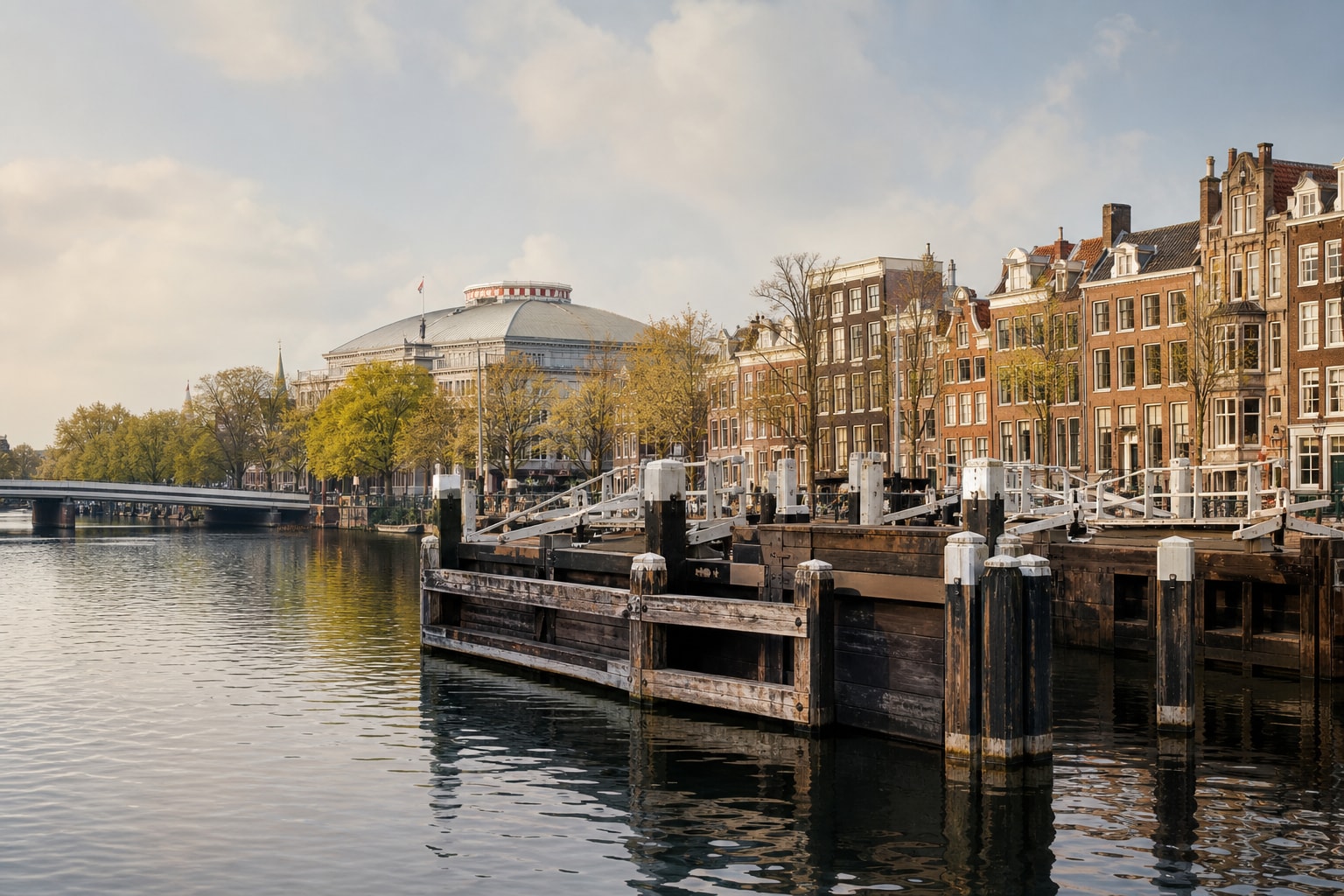
The locks are situated directly across from this iconic neo-Renaissance theater, providing a grand architectural backdrop for your visit.
Engineering
Wooden Lock Gates
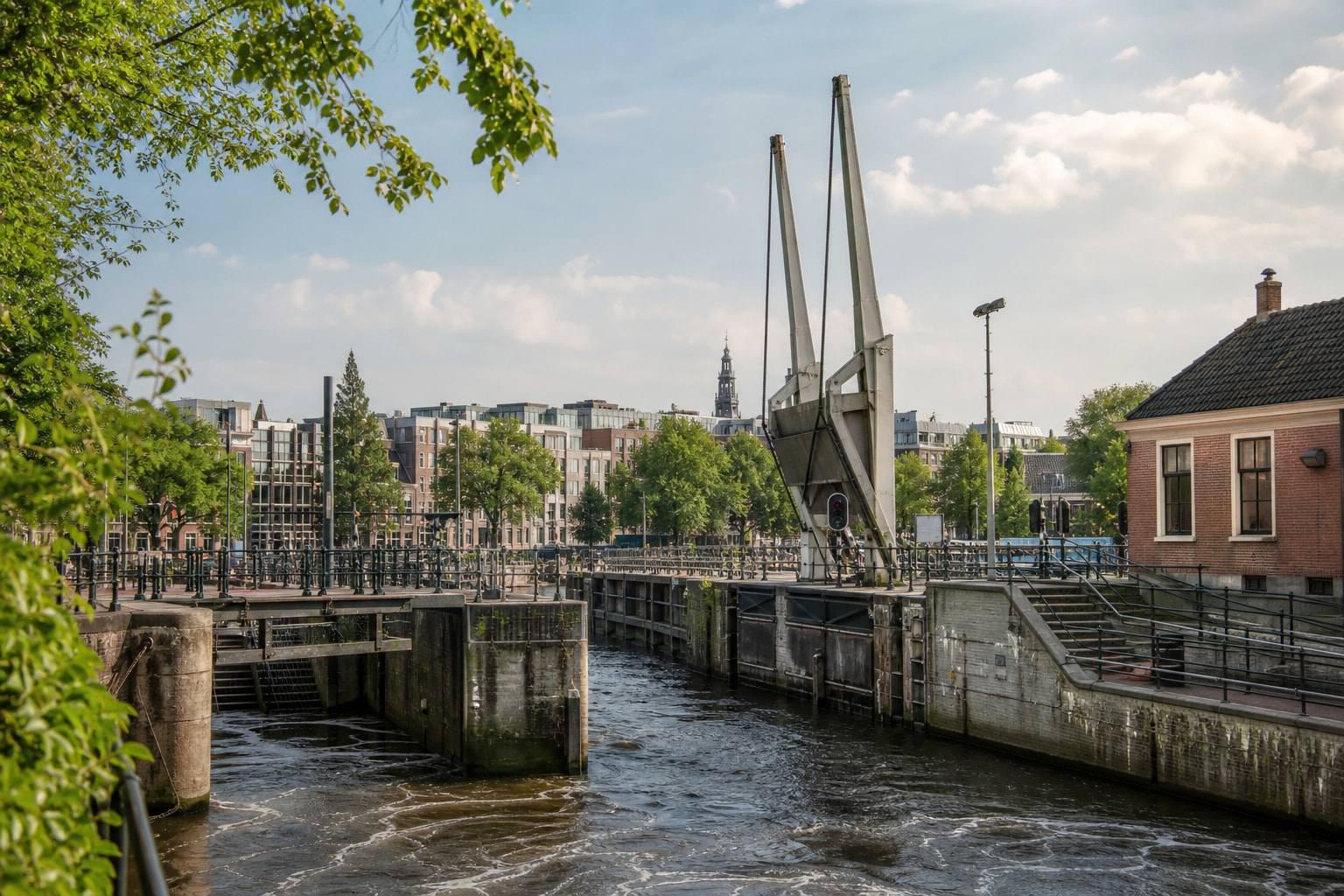
Observe the massive wooden gates and stone masonry that have stood for centuries, showcasing traditional Dutch hydraulic engineering.
Perspective
River Views
This location offers one of the widest and most unobstructed views of the Amstel, perfect for capturing the scale of the river.
Visitor Experience
When to Visit
Morning
Quiet Reflection
Visit early in the day to see the water at its calmest and avoid the crowds that gather near the nearby Skinny Bridge.
Evening
Golden Hour
The setting sun reflects beautifully off the Amstel, illuminating the locks and the facade of the Carré theater.
On the Water
Boat Tours
Many canal cruises pass through or near the locks, offering a unique perspective from the water level.
Visual Heritage
A Monument in Art
The Amstelsluizen have long been a subject for artists, appearing in various prints and drawings that document the evolution of Amsterdam's waterfront. The Rijksmuseum houses several historical depictions that show the locks in their original 17th and 18th-century contexts.
Visitor Info
Planning Your Visit
The Amstelsluizen are a public monument and can be viewed for free at any time. There is no visitor center on-site, but the area is easily accessible on foot or by bicycle.
Official Visitor InformationInformation
Visitor Centers
For general city maps and advice, visit the official I amsterdam visitor centers at Centraal Station or Schiphol Airport.
Accessibility
Viewing Points
The best land-based views are from the banks of the Amstel near the Magere Brug or directly in front of Theater Carré.
Bookable experiences
Experiences around Amstelsluizen.
Some links may earn Amsterdam Explorer a commission, at no extra cost to you. The booking content appears only after you accept optional content.
Getting There
Transport Links
The locks are located near the Weesperplein metro station (Lines 51, 53, and 54). Alternatively, Tram lines 1, 7, and 19 stop nearby at the Frederiksplein or Weesperplein stops. It is a short, scenic walk from the Rembrandtplein area.
Common Questions
Frequently Asked Questions
Can you walk across the locks?⌄
No, the locks are functional water management structures and are not open for pedestrian crossing. You can view them from the riverbanks or the nearby Magere Brug.
Are the locks still in use today?⌄
Yes, the Amstelsluizen remain an active part of Amsterdam's water management system, helping to regulate levels between the river and the canal rings.
What is the best way to see the locks?⌄
A canal cruise that travels along the Amstel provides the most intimate view, but standing on the Magere Brug (Skinny Bridge) offers the best panoramic photo opportunity.