NeighbourhoodAmstelveen / Amsterdam South
Parks & Outdoors
Amsterdamse Bos
Escape to a massive man-made woodland three times the size of Central Park, offering everything from professional rowing to organic goat cheese.
Best forCycling, rowing, and family outings
Plan for3–6 hours
Worth knowingThe park is 4 meters below sea level
Introduction
Amsterdam's Great Outdoors
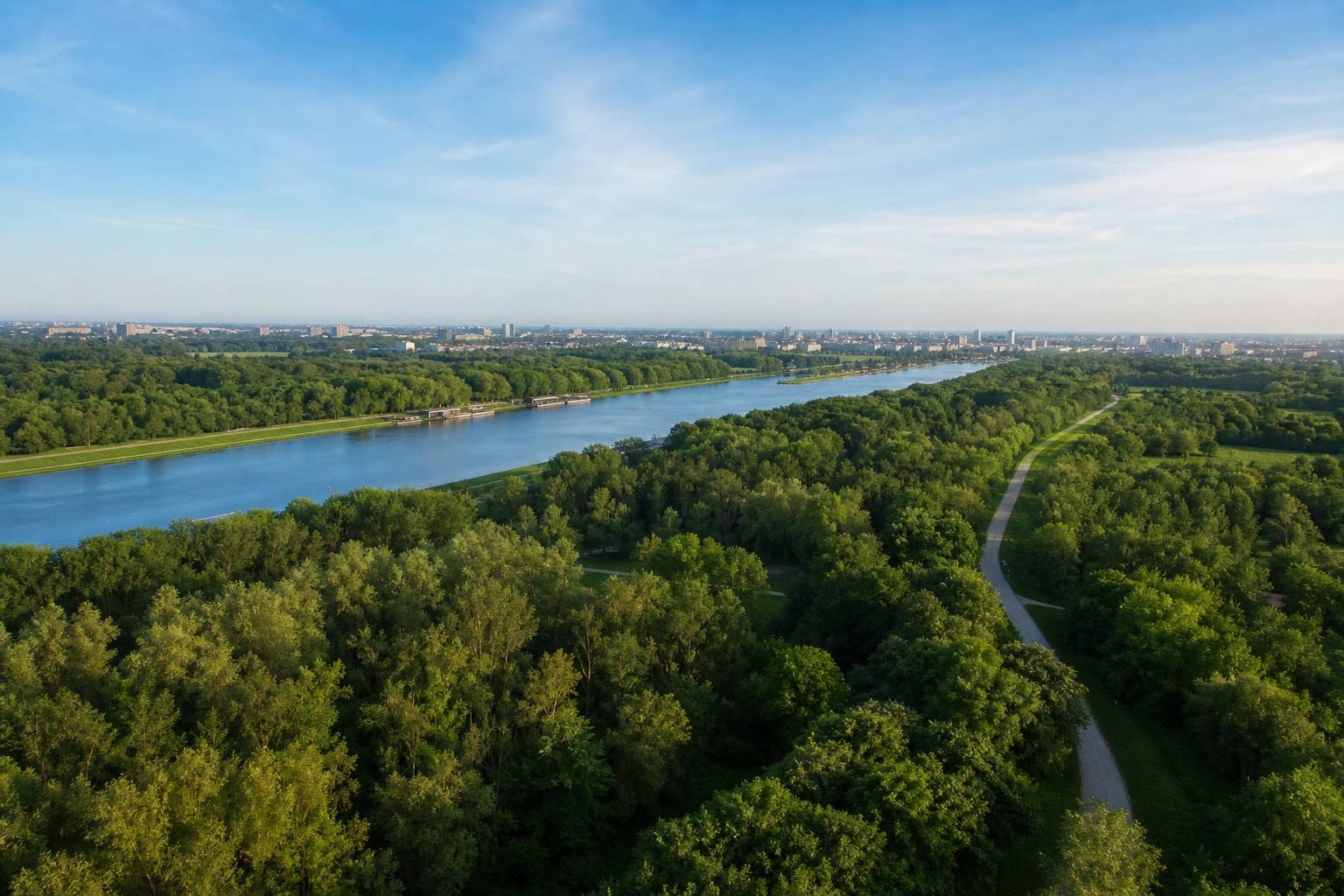
The Amsterdamse Bos is not a natural forest but a meticulously planned landscape park. Designed in the early 20th century, it was built on a polder located four meters below sea level. The park serves as a vital green lung for the city, spanning approximately 1,000 hectares. Its design follows the English landscape style, characterized by open vistas, winding paths, and a sense of curated wilderness that feels entirely organic despite its engineered origins.
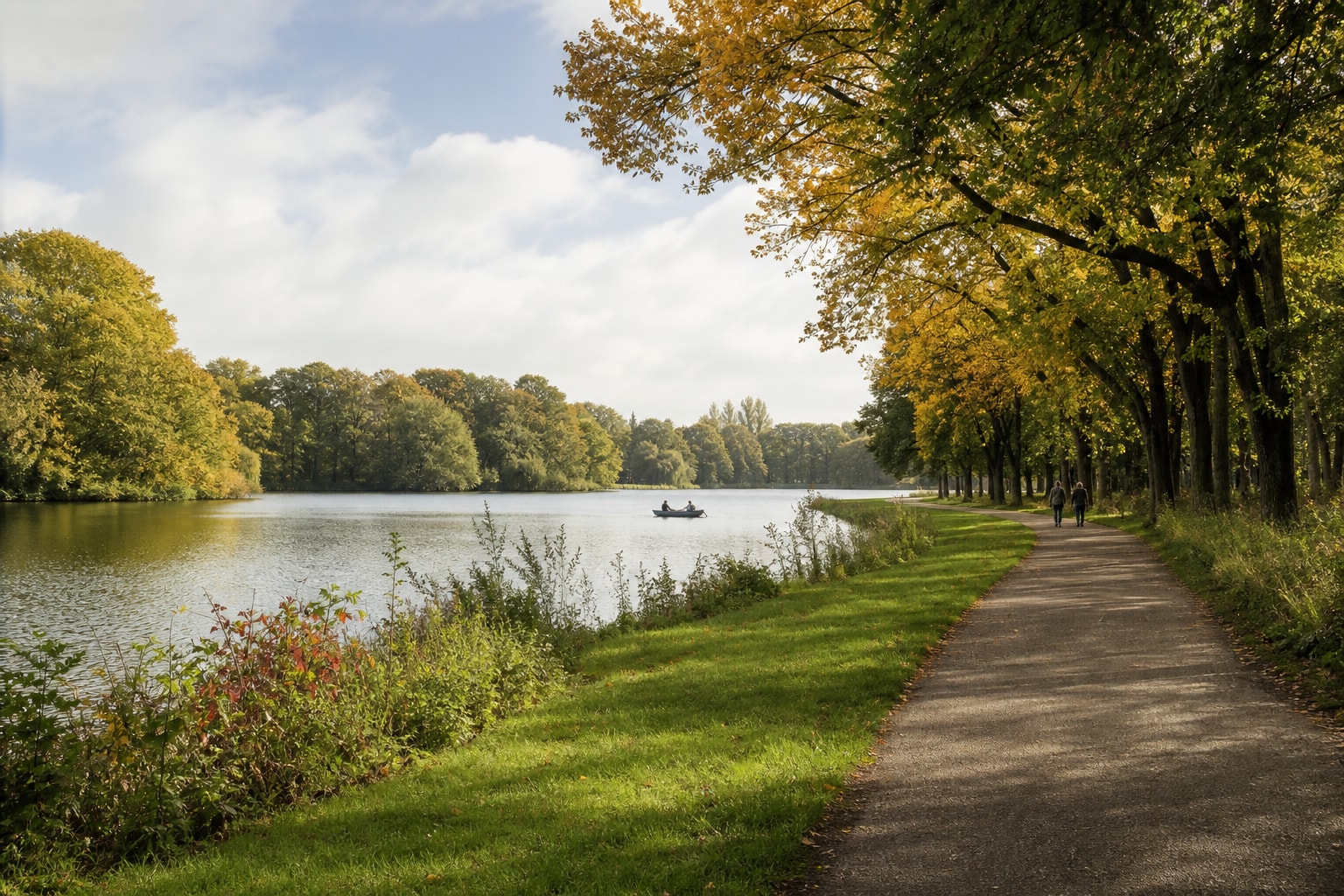
Visitors come here to escape the urban density of the city center. The park is home to the Bosbaan, a world-renowned rowing course that hosts international competitions. Beyond sports, the forest offers a diverse range of environments, from dense woodland and marshy nature reserves to open meadows perfect for picnics. It is a multi-functional space where nature conservation meets active recreation, providing a home for Highland cattle and various bird species alongside thousands of daily visitors.
Heritage
A Visionary Public Project
The creation of the Amsterdamse Bos began in 1934 during the Great Depression. It was conceived as a massive employment project to provide work for thousands of unemployed Amsterdammers. Under the guidance of park architect Jakoba Mulder and urban planner Cornelis van Eesteren, workers manually planted over 200 species of trees and dug out the massive rowing lake. The first section opened to the public in 1937, though the full original plan was not officially completed until 1964.
The park's layout was revolutionary for its time, prioritizing functional recreation for the working class. Unlike the formal gardens of the past, the 'Forest' was built for movement. During World War II, the park provided a source of wood for fuel for local residents, but it was replanted and expanded in the post-war years. Today, it stands as a monument to Dutch hydraulic engineering and social planning, successfully transforming a low-lying polder into a thriving ecosystem.
Must-See
Forest Favorites
Sport
The Bosbaan
This 2,200-meter long rowing course is the oldest man-made rowing lake in the world. It remains a premier venue for international regattas and is a popular spot for joggers who follow the perimeter path.
Family
Geitenboerderij Ridammerhoeve
A fully functional organic goat farm located in the heart of the forest. Visitors can feed the baby goats, watch the milking process, and enjoy organic cheese and ice cream at the onsite cafe.
Culture
Amsterdamse Bostheater
A large open-air amphitheater that hosts major theatrical productions and music concerts during the summer months. It offers a unique atmosphere where audiences can enjoy performances under the stars.
Experience
A Day in the Forest
Morning
Active Exploration
Start at De Boswinkel (the visitor center) to grab a map. Rent a bike at De Boshalte or head to the water to rent a canoe or stand-up paddleboard to explore the winding waterways before the afternoon crowds arrive.
Afternoon
Nature and Animals
Cycle toward the Bloesempark (Cherry Blossom Park) if visiting in spring, or head to the goat farm for lunch. Keep an eye out for the Scottish Highland cattle that roam the Schinkelbos area to maintain the landscape.
Evening
Sunset and Shows
Wind down with a walk along the Nieuwe Meer lake. If you are visiting during the summer season, check the schedule for the Bostheater for an evening performance in the woods.
Scenery
Seasonal Beauty
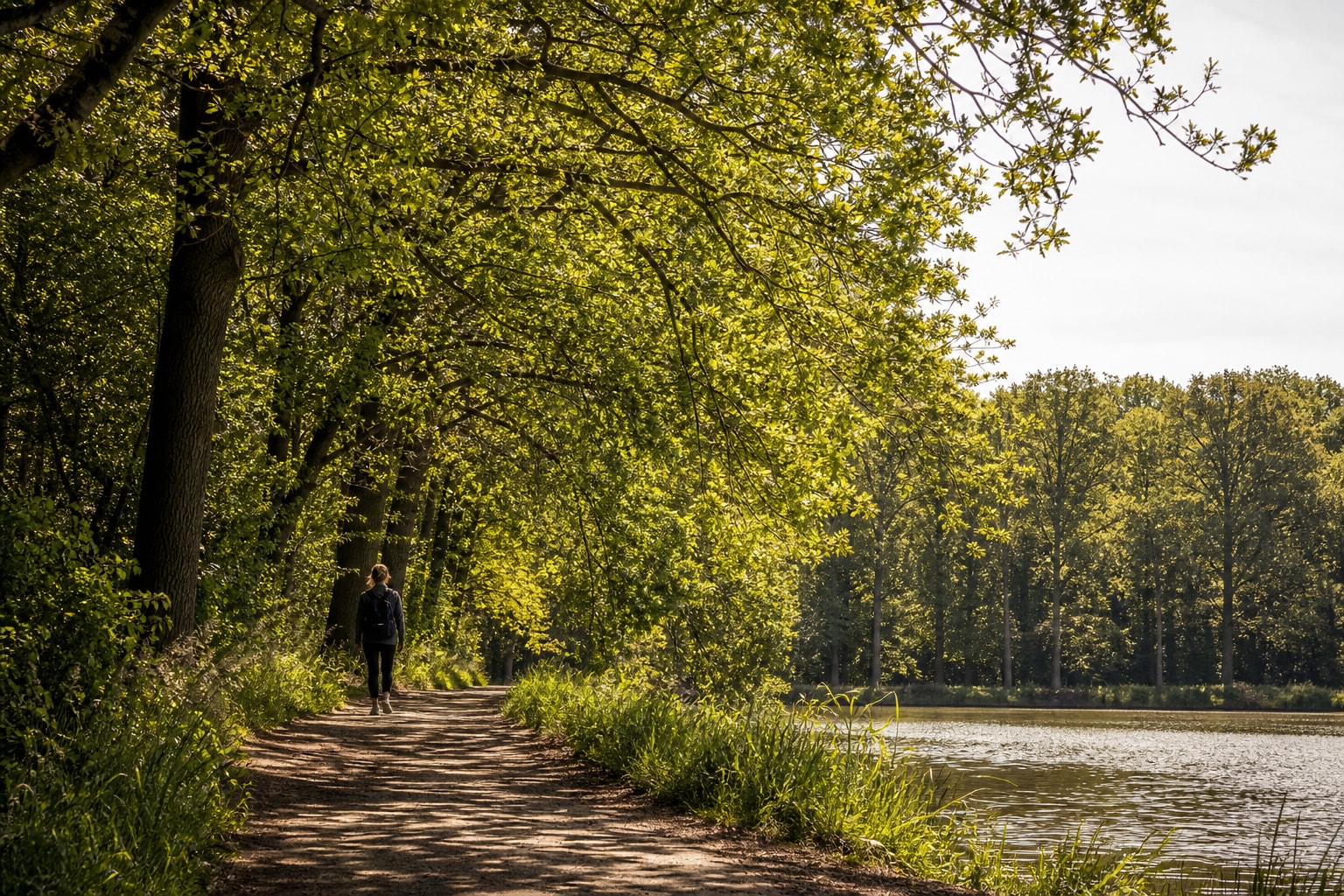
The park transforms dramatically with the seasons. In late March and early April, the 400 cherry trees in the Bloesempark—a gift from the Japan Women’s Club—erupt in pink blossoms. Autumn brings a vibrant display of changing leaves across the thousands of oaks and beeches, while winter offers a stark, quiet beauty perfect for long, brisk walks.
Visitor Info
Planning Your Trip
The Amsterdamse Bos is free to enter and open 24 hours a day, though individual attractions like the goat farm and bike rentals have specific operating hours. The visitor center, De Boswinkel, provides detailed information on walking routes and current events.
Official Amsterdamse Bos WebsiteRentals
Getting Around
Bicycles can be rented at De Boshalte near the main entrance. For water activities, the Kano & Waterfietsverhuur offers canoes, kayaks, and pedal boats.
Facilities
Dining
There are several pancake houses (Boerderij Meerzicht) and cafes scattered throughout the park, but many visitors prefer to bring their own picnic to enjoy in the designated fields.
Bookable experiences
Experiences around Amsterdamse Bos.
Some links may earn Amsterdam Explorer a commission, at no extra cost to you. The booking content appears only after you accept optional content.
Directions
Getting to the Forest
The park is easily accessible from Amsterdam city center. You can take Tram 5 or Metro 51 to Amstelveenseweg and walk or cycle from there. During the summer, the historic Electrische Museumtramlijn (Electric Museum Tramway) runs from near the Haarlemmermeerstation directly to the park entrance. For those driving, there are several parking lots, though they can fill up quickly during sunny weekends and the cherry blossom season.
FAQ
Common Questions
Is the Amsterdamse Bos free to visit?⌄
Yes, entry to the park itself is free. However, specific activities like the climbing park, boat rentals, and theater performances require a fee.
Can I swim in the park?⌄
Yes, swimming is permitted in designated areas such as the Grote Vijver and the Nieuwe Meer. Always check local signs for water quality alerts.
Are dogs allowed?⌄
Dogs are welcome in most parts of the park, and there are many off-leash areas. However, they must be kept on a lead in sensitive nature zones and near the goat farm.