NeighbourhoodCentrum / Canal Belt
Historic Landmarks
Magere Brug
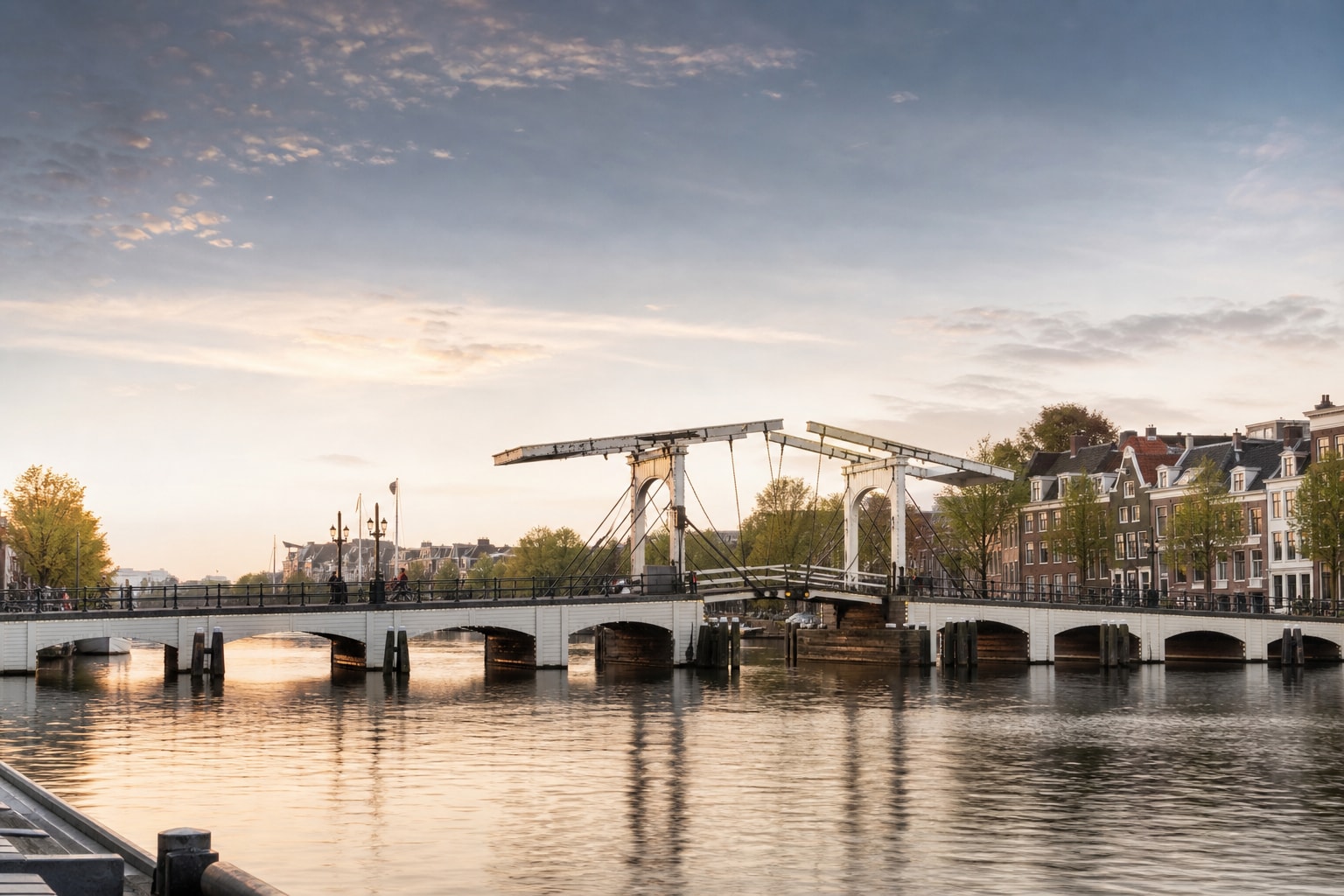
Spanning the Amstel River, this iconic white wooden bridge is a masterpiece of Dutch design and a romantic symbol of old Amsterdam.
Best forPhotography and Romantic Walks
Plan for15–30 minutes
Worth knowingIt features over 1,200 lights at night.
Introduction
The Skinny Bridge of the Amstel
The Magere Brug, translated literally as the 'Skinny Bridge,' is perhaps the most famous of Amsterdam's 1,500+ bridges. It connects the banks of the Amstel River at Kerkstraat, positioned between the Keizersgracht and Prinsengracht. The structure is a traditional Dutch double-bascule bridge, characterized by its white-painted wood and the mechanical ability to open for passing river traffic.
While the bridge is a functional piece of infrastructure, it is best known for its aesthetic appeal. Every evening, the bridge is transformed by approximately 1,200 light bulbs that trace its silhouette, making it a primary destination for night photography and canal cruises. It remains a pedestrian and cyclist-only crossing, preserving a quiet, historic atmosphere despite its central location.
Heritage
From 1691 to the Present
The first bridge at this location was constructed in 1691 and was known as the Kerkstraatbrug. It was an exceptionally narrow wooden bridge with 13 arches. According to local lore, the bridge was so thin that two pedestrians could barely pass each other, leading to the nickname 'Magere Brug.' Another popular legend suggests it was built by two wealthy sisters, the Mager sisters, who lived on opposite sides of the river and wanted an easier way to visit one another.
By 1871, the original structure had deteriorated significantly. It was demolished and replaced by a nine-arched wooden bridge. The current version of the bridge was built in 1934. While it retains the classic look of its predecessors, it was designed to be slightly larger to accommodate the growing needs of the city, though it kept the traditional white-painted timber aesthetic that defines the Amstel's riverfront.
What to See
Bridge Features
Architecture
Double-Bascule Design
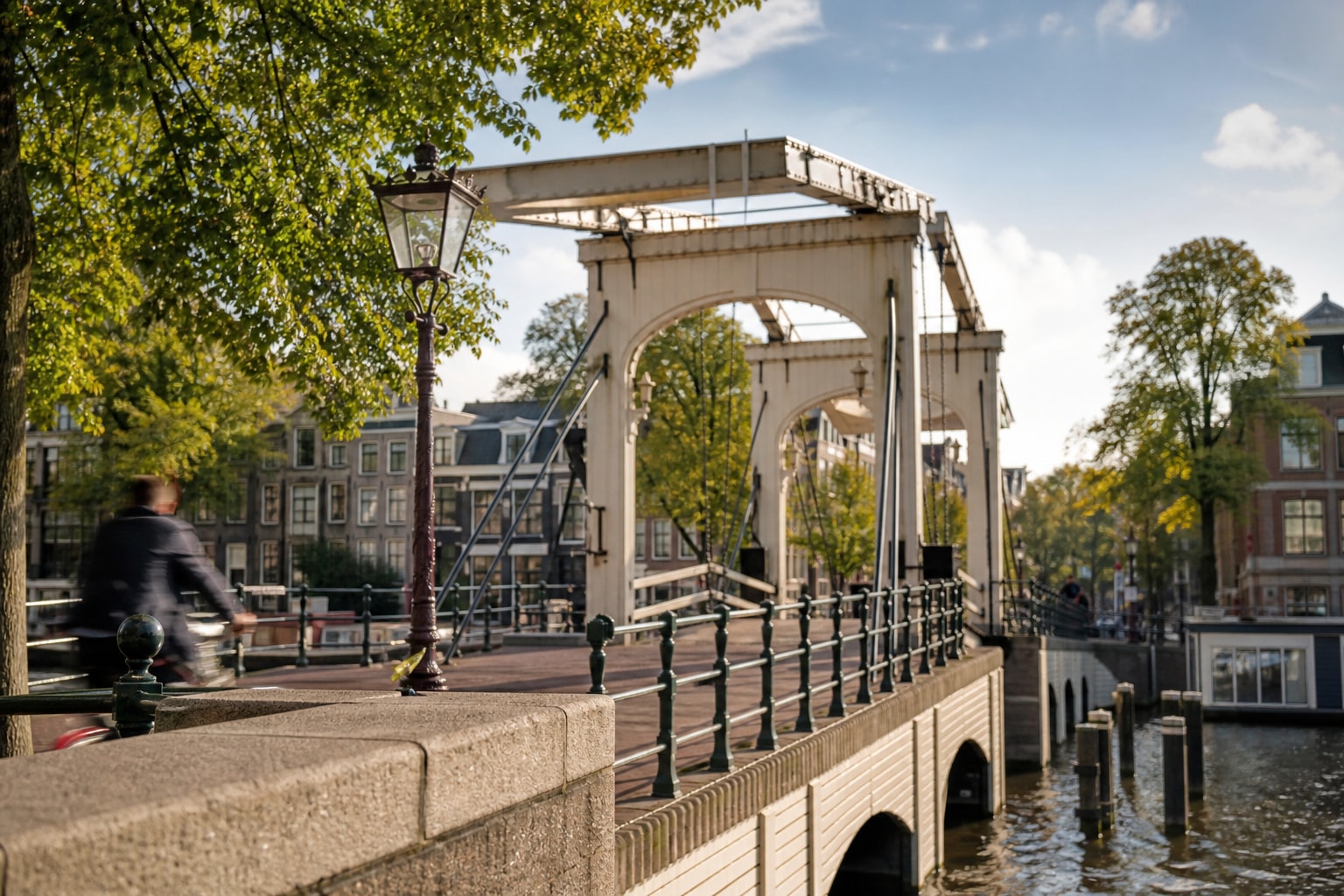
Observe the traditional Dutch drawbridge mechanism. The central section can be raised to allow large canal boats and ships to pass through the Amstel.
Atmosphere
Evening Illumination
Visit after sunset to see the bridge lit by 1,200 lights. The reflection in the dark water of the Amstel is one of the city's most enduring images.
Views
Amstel Panorama
Standing on the bridge offers clear views of the Amstelsluizen (locks) and the Royal Theater Carré, providing a sense of the river's scale.
Visitor Experience
Timing Your Visit
Daytime
Cyclists and Sunlight
During the day, the bridge is a busy thoroughfare for local cyclists. It is the best time to appreciate the white woodwork and the mechanical details of the bascule.
Sunset
The Golden Hour
As the sun sets over the canals, the bridge becomes a magnet for photographers. The light hitting the white timber creates a soft, historic glow.
Night
Romantic Ambiance
Late at night, the crowds thin out. The illuminated bridge is a popular spot for couples, fueled by the legend that a kiss on the bridge ensures eternal love.
Visuals
A Photographer's Dream
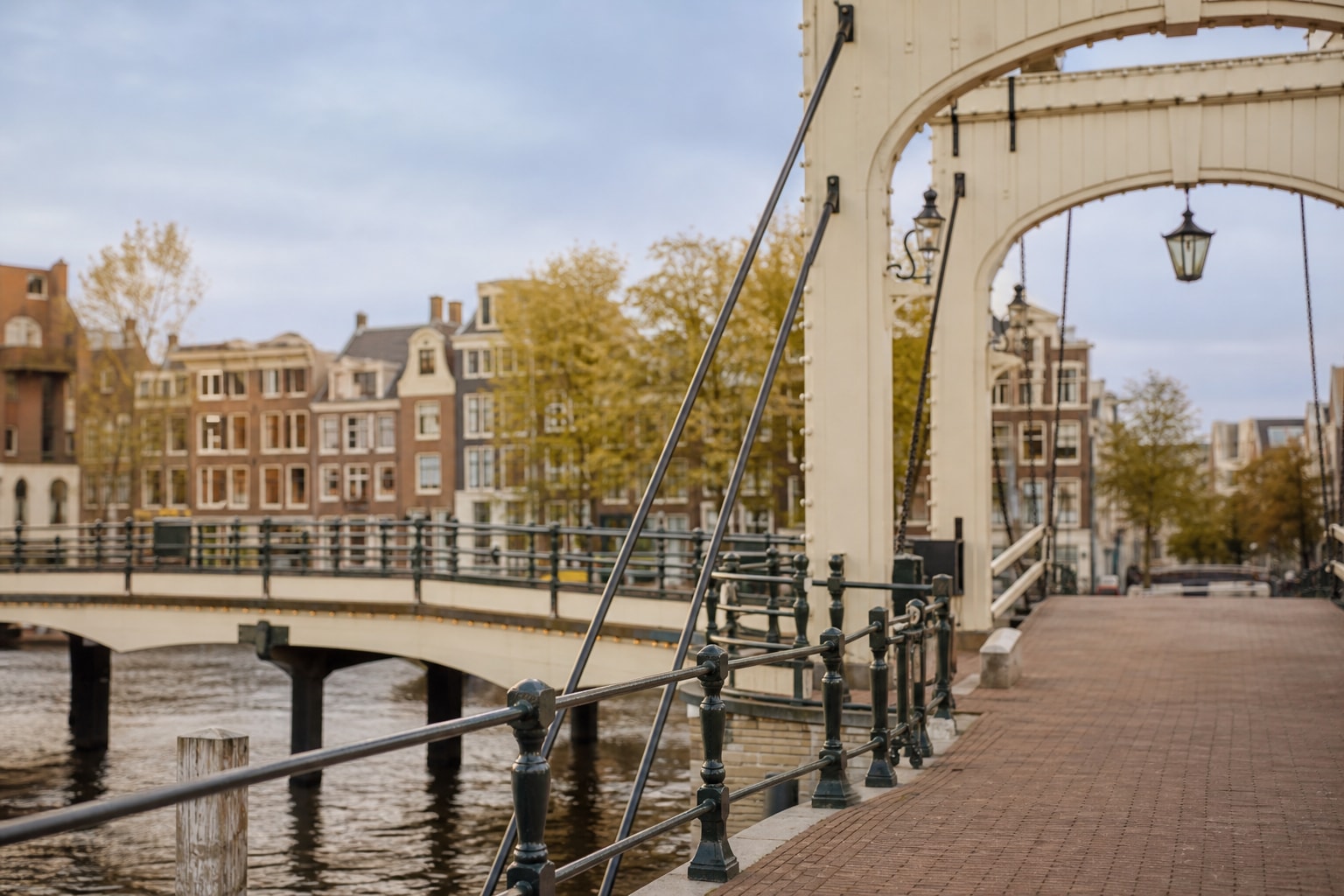
The Magere Brug is frequently featured in films and postcards. Its symmetry and the way it frames the Amstel River make it a versatile subject for both wide-angle landscape shots and detailed architectural photography.
Information
Visitor Tips
The bridge is a public thoroughfare and is free to access at all times. Because it is a working drawbridge, you may occasionally have to wait a few minutes for it to close after a boat passes.
Access
Pedestrians Only
Motorized vehicles are not permitted on the bridge. It is strictly for pedestrians and cyclists, making it safe for walking.
Nearby
Local Sights
The bridge is within walking distance of the Hermitage Amsterdam (H'ART Museum) and the Waterlooplein Market.
Bookable experiences
Experiences around Magere Brug.
Some links may earn Amsterdam Explorer a commission, at no extra cost to you. The booking content appears only after you accept optional content.
Directions
Getting There
The Magere Brug is easily reached by public transport. The nearest metro station is Waterlooplein (Lines 51, 53, and 54), which is a short walk away. Alternatively, Tram 4 stops at Keizersgracht, placing you just a few minutes from the riverbank. Many canal cruises also pass directly under the bridge, offering a unique perspective from the water.
FAQ
Common Questions
Why is it called the Skinny Bridge?⌄
The name comes from the original 1691 bridge, which was so narrow that locals called it 'magere' (skinny). Legend also attributes the name to the Mager sisters.
When do the lights turn on?⌄
The 1,200 lights typically turn on automatically at dusk, coinciding with the city's street lighting schedule.
Can you cross the bridge by car?⌄
No, the Magere Brug is reserved for pedestrians and cyclists only.