NeighbourhoodJodenbuurt (Jewish Quarter)
Jewish Cultural Quarter
Portuguese Synagogue
Step into the 17th century at the Esnoga, a monumental Sephardic synagogue that remains illuminated by candlelight and preserved in its original 1675 glory.
Best forHistory & Architecture
Plan for1–1.5 hours
Worth knowingNo electric light or heating in the main hall
A Golden Age Landmark
The Esnoga of Amsterdam
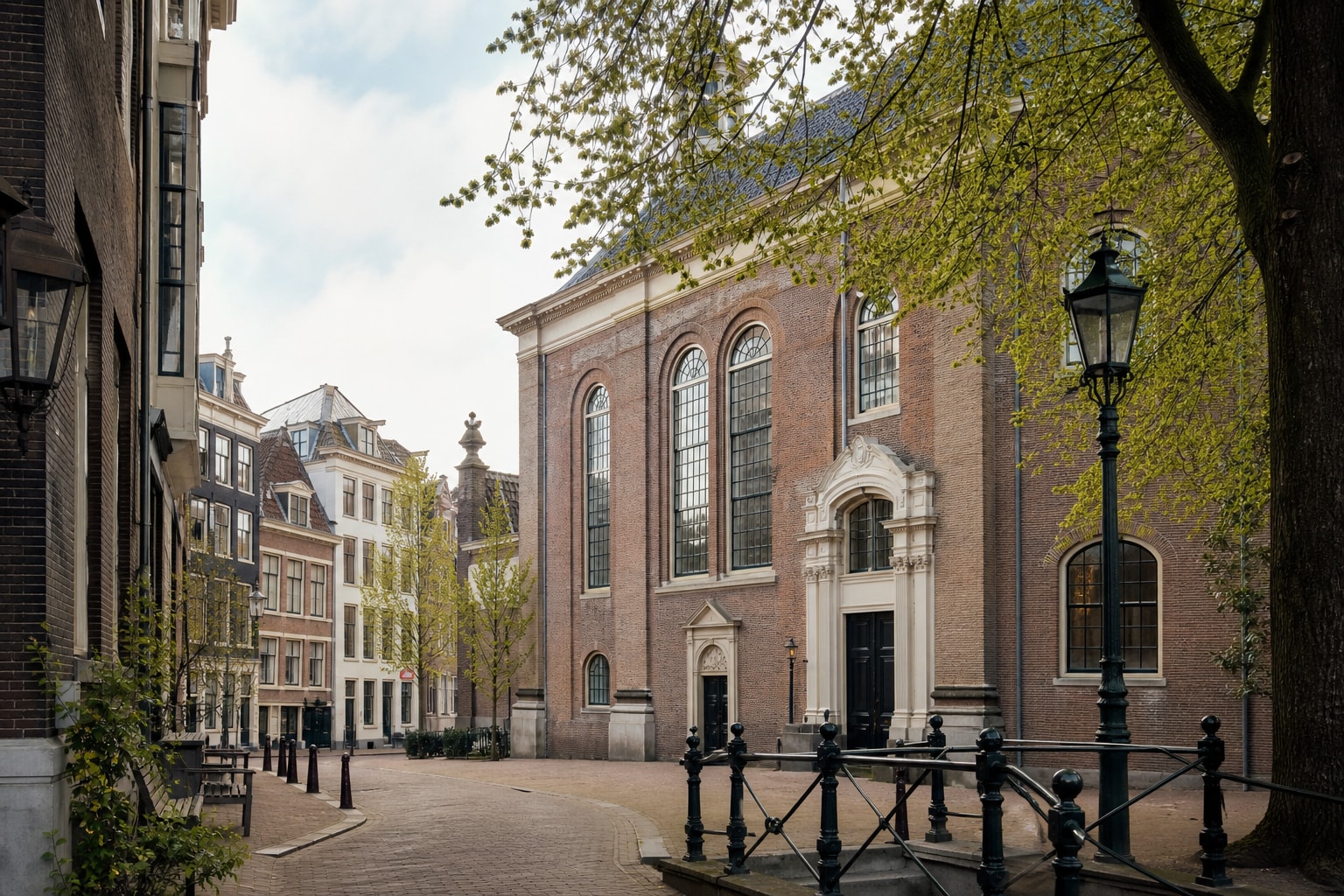
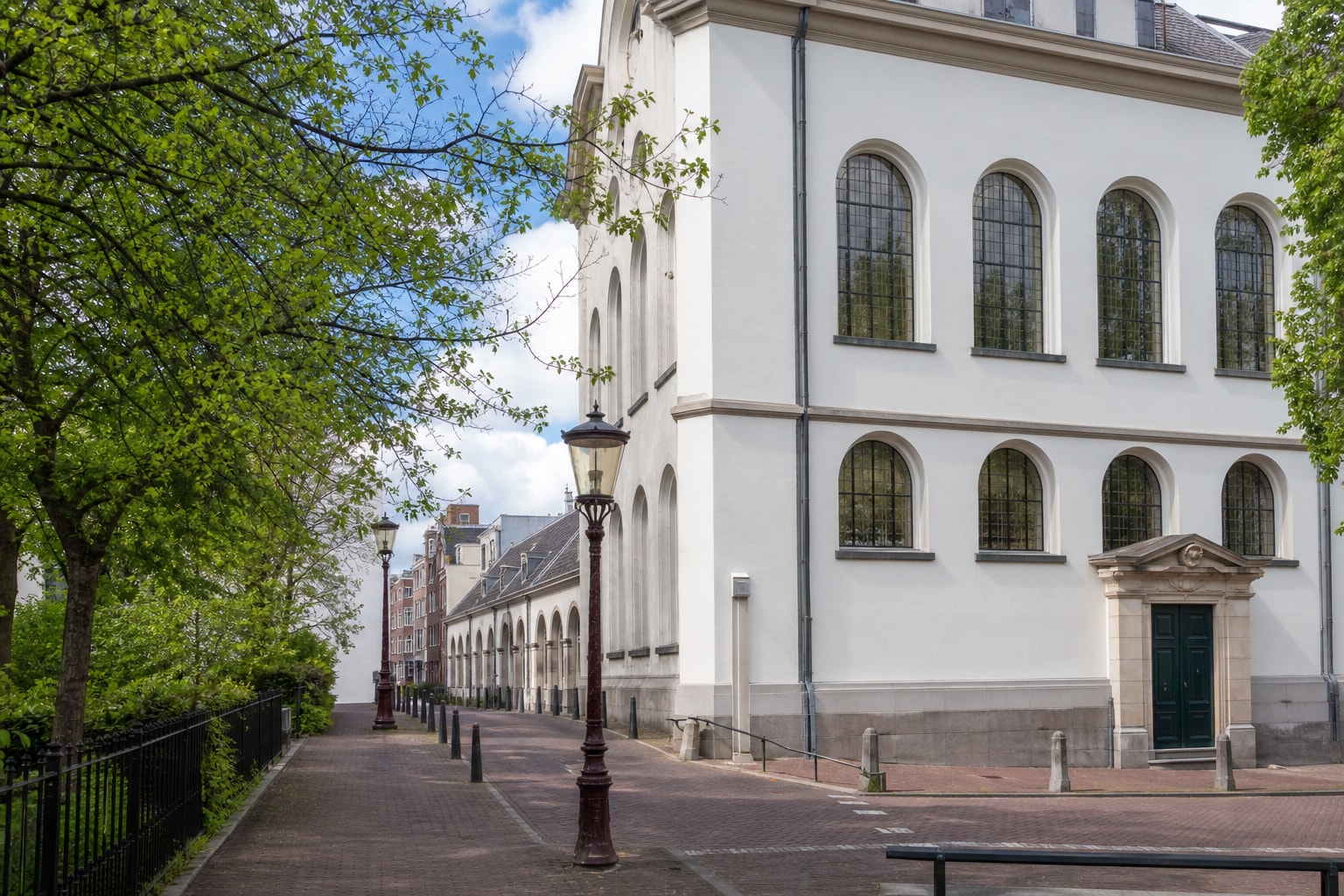
The Portuguese Synagogue, known locally as the Esnoga or Snoge, stands as a testament to the religious tolerance of the Dutch Golden Age. Completed in 1675 for the Sephardic Jewish community—many of whom fled the Inquisition in Spain and Portugal—it was once the largest synagogue in the world. Its massive brick structure and austere exterior hide one of the most breathtaking interiors in the Netherlands.
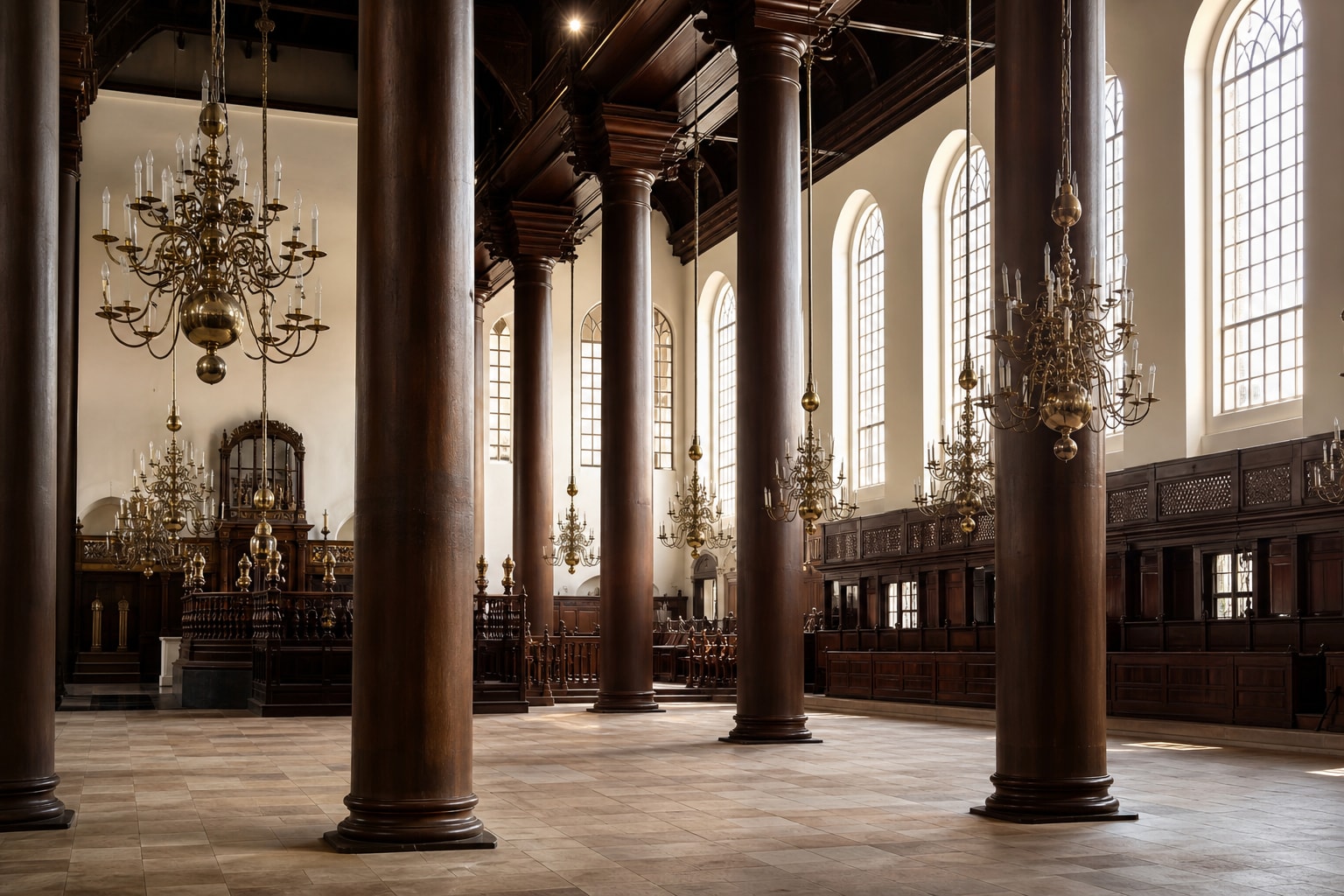
Unlike most modern buildings, the main sanctuary has never been fitted with electric lighting or central heating. Instead, it is illuminated by large windows during the day and hundreds of candles in brass chandeliers by night. The floor is still covered with fine sand, a traditional Dutch Sephardic custom used to dampen noise and absorb moisture from shoes.
Today, the building serves a dual purpose: it is a functioning place of worship for the Orthodox Sephardi congregation and a key site within the Jewish Cultural Quarter. Visitors can explore the complex, which includes the main sanctuary, the winter synagogue, and the world-renowned Ets Haim library.
17th-Century Heritage
A Sanctuary of Freedom
The history of the Portuguese Synagogue is deeply tied to the arrival of Sephardic Jews in Amsterdam during the late 16th and early 17th centuries. These 'New Christians' returned to their Jewish roots in the relatively tolerant atmosphere of the Dutch Republic. By the mid-1600s, the community had grown wealthy and influential enough to commission a grand house of worship that reflected their status.
Architect Elias Bouman designed the building, drawing inspiration from the Temple of Solomon in Jerusalem. When it opened in 1675, it was a marvel of engineering, supported by massive wooden pillars. Remarkably, the synagogue survived the Nazi occupation of Amsterdam during World War II largely intact, though the community it served was devastated.
In the post-war years, the synagogue underwent significant restoration to preserve its unique features. It remains one of the few places in the world where one can experience a 17th-century religious service in its original setting, maintaining the Sephardic 'Nusach' (customs) that have been practiced here for over three centuries.
What to See
Treasures of the Complex
Architecture
The Great Sanctuary
Marvel at the enormous wooden barrel vaults and the four giant Ionic columns that support the roof. The space is designed to be filled with natural light from large arched windows.
Literature
Ets Haim Library
Founded in 1616, Ets Haim is the oldest active Jewish library in the world. It is housed within the synagogue complex and is part of the UNESCO Memory of the World Register.
Artifacts
The Treasure Chambers
Located in the basement, these rooms display a stunning collection of silver ceremonial objects, embroidered textiles, and historical manuscripts belonging to the congregation.
Visitor Experience
Atmosphere and Events
Daytime
Quiet Contemplation
During the day, the synagogue is a peaceful retreat. The lack of electricity creates a unique play of light and shadow across the wooden pews and sanded floors.
Evening
Candlelight Concerts
The synagogue occasionally hosts evening concerts where the space is lit entirely by over 1,000 candles, providing an acoustic and visual experience unlike any other in the city.
Sabbath
Active Worship
As a functioning synagogue, the building is closed to tourists on Saturdays and Jewish holidays to accommodate religious services for the local congregation.
Visual Splendour
A Timeless Interior
The interior of the Esnoga is defined by its dark wood pews, which face each other in the traditional Sephardic style, and the magnificent mahogany Holy Ark (Hechal) at the eastern end. The sheer scale of the brass chandeliers, which must be lowered and lit by hand, emphasizes the building's commitment to historical authenticity.
Visitor Info
Planning Your Visit
The Portuguese Synagogue is part of the Jewish Cultural Quarter. A single ticket typically grants access to this site, the Jewish Museum, the JHM Children's Museum, and the National Holocaust Memorial.
Official websiteDress Code
Respectful Attire
As this is an active house of worship, visitors are asked to dress modestly. Men are required to wear a head covering (kippah), which is provided for free at the entrance.
Climate
Seasonal Comfort
Because there is no central heating, the interior can be very cold in winter. Visitors are advised to dress warmly if visiting between November and March.
Bookable experiences
Experiences around Portuguese Synagogue.
Some links may earn Amsterdam Explorer a commission, at no extra cost to you. The booking content appears only after you accept optional content.
Getting There
Location & Transport
The synagogue is located at Mr. Visserplein 3, in the heart of the old Jewish Quarter. It is easily accessible via public transport; take Metro lines 51, 53, or 54 to Waterlooplein station, which is just a short walk away. Tram 14 also stops nearby at the Mr. Visserplein stop.
Common Questions
Frequently Asked Questions
Is the synagogue accessible for people with disabilities?⌄
Yes, the main sanctuary and the treasure chambers are accessible. However, some parts of the historic complex may have narrow passages or small steps.
Can I take photos inside?⌄
Photography is generally permitted for personal use, but the use of flash and tripods is often restricted to protect the historic interior.
When is the synagogue closed?⌄
The synagogue is closed to visitors every Saturday for the Sabbath and during major Jewish holidays. It is also closed on certain Fridays in the winter when services begin early.